
Northern Ireland is small enough to drive across in a couple of hours, and somehow it still manages to pack in a UNESCO World Heritage wonder, a coast road regularly named among the most beautiful drives on earth, a city that built the most famous ship in history, and more Game of Thrones filming locations than anywhere else on the planet. For somewhere so compact, it punches extraordinarily far above its weight.
Some links in this guide are affiliate links. If you book through one I may earn a small commission, at no extra cost to you. As an Amazon Associate I earn from qualifying purchases. I only link to things I would use myself.
It’s also, I’ll be honest, still one of the most underrated corners of these islands. While the crowds pile into Dublin and Kerry, you can have a clifftop castle, an empty golden beach or an entire mountain range almost to yourself. You get the dramatic scenery, the deep history and the famous Irish welcome, just with more room to breathe and a good deal less in your wallet.
This is a place I know well, and the more I show people around it, the more I’m convinced it deserves a spot near the top of any Ireland trip. So here’s everything you need: the best things to do in Northern Ireland, region by region, what the people and the weather are really like, where to stay, and how to get around.
Planning the drive? Every stop on the Causeway Coastal Route, on one map, with what each one charges and how long to give it.
If you would rather have it as a route than a list, I have written it up as a five day Northern Ireland road trip.
Why visit Northern Ireland?
If you take one thing home from Northern Ireland, it won’t be a photograph, it’ll be the people. There’s a warmth here that catches a lot of visitors off guard: strangers who’ll walk you to the place you’re looking for rather than just pointing, a barman who’ll have your life story (and you his) by the end of a pint, a quickness to laughter that runs through every conversation.
The local sense of humour is dry, self-deprecating and constant, and “the craic”, that hard-to-translate blend of good company, banter and a bit of devilment, is taken seriously as a measure of a good night. People here are natural storytellers, which is part of what makes the history come alive when you visit; ask a local guide a simple question and you’ll often get a far better answer than any plaque could give you. Don’t be shy about striking up conversation. Half the best tips I could give you about Northern Ireland, I got from someone I’d just met.
Flying from the US?
Most Americans pay too much to get to Ireland.
I send one email a week with the best fares from US airports into Dublin, Shannon and Belfast, plus what to actually do when you land. $14.99 for the year, refunded if it does not pay for itself.
The weather, and the best time to visit Northern Ireland
Let’s be honest about the weather, because it’s the question everyone asks. Northern Ireland is green for a reason, it rains, and it can do all four seasons before lunch. The climate is mild rather than extreme: summers are cool rather than hot, winters are damp rather than freezing, and a bright morning can turn to a shower and back again while you’re still deciding what to wear. The trick isn’t to wait for perfect weather, you’ll wait a long time, it’s to come prepared and embrace it. Pack layers, a properly waterproof jacket and decent footwear, and a sunny spell over the Causeway or the Mournes will feel like a gift.
One season deserves its own mention. Halloween began here as Samhain, and Northern Ireland now runs some of the biggest celebrations anywhere. If you are travelling in late October, see Halloween events in Northern Ireland.
The best time to visit Northern Ireland is generally late spring to early autumn, roughly May to September. When the days are long and the landscape is at its greenest. June and July bring extraordinarily long evenings, with light in the sky until close to eleven at night, which gives you hours more to explore. Those months are also the busiest, so if you’d rather dodge the crowds, May and September hit the sweet spot of decent weather and quieter trails. And don’t write off the winter: short days, yes, but cosy pubs, turf fires, dramatic stormy coastlines and Christmas markets have a real charm of their own.
Northern Ireland month by month
Averages only get you so far. What actually decides a trip here is how much daylight you get, what is on, and what has closed for the winter, and all three change sharply month to month. I am writing a guide to each one.
Northern Ireland in October is the best all-round month of the year: autumn colour, the coast without the coaches, Derry Halloween and a four-week arts festival in Belfast. Watch the clocks going back on 25 October, which costs you an hour of evening light overnight.
Northern Ireland in November is the cheapest and emptiest month, with the Foyle Film Festival in Derry and the Armagh Georgian Festival at the end of it. Seven and a half hours of daylight by the 30th, so it is a month for museums, distilleries and storm-watching.
Northern Ireland in December splits in two: the Belfast Christmas Market and the Enchanted Winter Garden on one side, an empty Causeway Coast on the other. Plan carefully around the Christmas Day and Boxing Day shutdown, which is more complete here than most visitors expect.
Best places to visit in Northern Ireland
If you’re planning a first trip, these are the headline attractions, the ones worth building a route around. The rest of this guide breaks them down region by region.
To rent a car in Northern Ireland click here.
The Causeway Coast and the Glens of Antrim
The Causeway Coastal Route is the jewel of Northern Ireland, a ribbon of road that hugs the Antrim coast from Belfast all the way to Derry, and is regularly ranked among the great drives of the world. You could rush it in a day, but you’d be doing it a disservice; this is a stretch to linger over, pulling in at hidden harbours, ruined castles and clifftop viewpoints whenever the mood takes you. Almost every headline attraction in this guide sits along it, which makes the coast road the natural spine of any Northern Ireland trip.
The Giant’s Causeway
Not driving? My honest guide to Giant’s Causeway tours covers what a day from Belfast or Dublin actually includes.
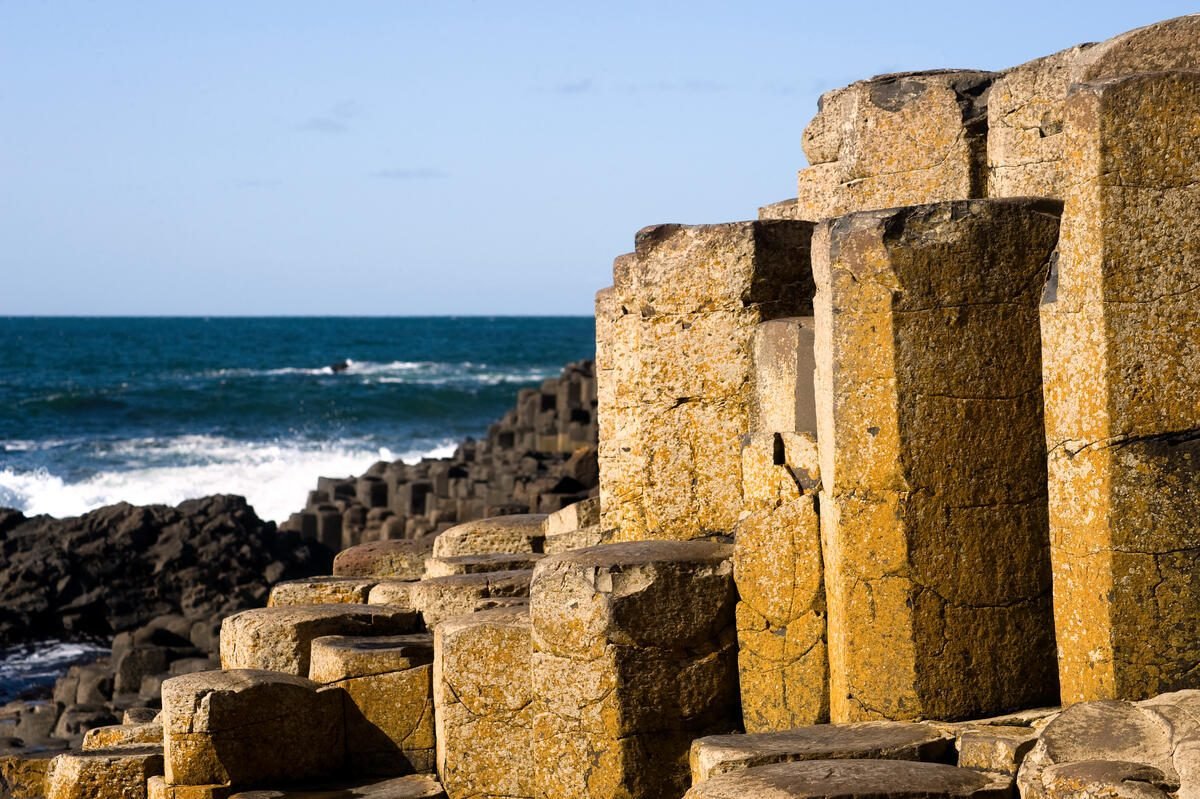
Northern Ireland’s only UNESCO World Heritage Site, and the one sight nobody should miss. Around 40,000 interlocking basalt columns step down into the sea in a vast natural honeycomb, formed by a volcanic eruption some 60 million years ago, or, if you prefer the better story, laid down by the giant Finn McCool as a path to fight a rival across the water in Scotland. Walking out onto the stones, with the Atlantic crashing around you, is genuinely awe-inspiring. The stones themselves are free to reach on foot, though the National Trust visitor centre, with its parking and exhibition, is ticketed, so you can do it on any budget.
Check out the Giant’s Causeway tour here.
Carrick-a-Rede Rope Bridge
A few miles along the coast, this rope bridge sways some thirty metres above the churning sea, linking the mainland to the tiny island of Carrickarede. It was first strung up by salmon fishermen centuries ago, and crossing it today is equal parts thrilling and beautiful, with views across to Rathlin Island and Scotland on a clear day. It’s a National Trust site with timed-entry tickets, so book ahead in summer, and steel your nerves for the wobble on the way across.
Check out the North Coast tour here.
Book the Causeway Coast day tour from Belfast, which includes Carrick-a-Rede
The Dark Hedges
An atmospheric tunnel of beech trees, their branches knitted together overhead, planted by the Stuart family back in the 18th century to impress visitors arriving at their estate. Two centuries on, they did exactly that for millions more when they appeared as the Kingsroad in Game of Thrones. It’s free to visit and quietly magical, though to get the empty, misty shot you’ve seen online, you’ll want to arrive at dawn before the tour buses pull in.
Check out the North Coast tour here.
Book the Giant’s Causeway and Game of Thrones day tour, which stops at the Dark Hedges
Dunluce Castle, Bushmills and the Glens
Round it all off with the rest of the coast’s treasures. Dunluce Castle is a dramatic medieval ruin clinging to the very edge of a cliff, so precarious that part of its kitchen is said to have tumbled into the sea one stormy night in the 17th century. Nearby, the Old Bushmills Distillery, licensed in 1608 and laying claim to being the oldest licensed whiskey distillery in the world, offers tours and tastings. And inland, the nine Glens of Antrim unfold in a series of wooded valleys and waterfalls, with the cascade at Glenariff, “the Queen of the Glens,” the pick of the bunch.
Check out the North Coast tour here.
See distillery tours and tastings in Bushmills
Belfast
Northern Ireland’s capital has reinvented itself into one of the most characterful small cities in Europe, a place of grand Victorian architecture, a roaring food and music scene, and a story it tells with remarkable honesty. It’s well worth two or three days of its own, and it’s the easiest base in the country to reach and get around without a car.
Titanic Belfast
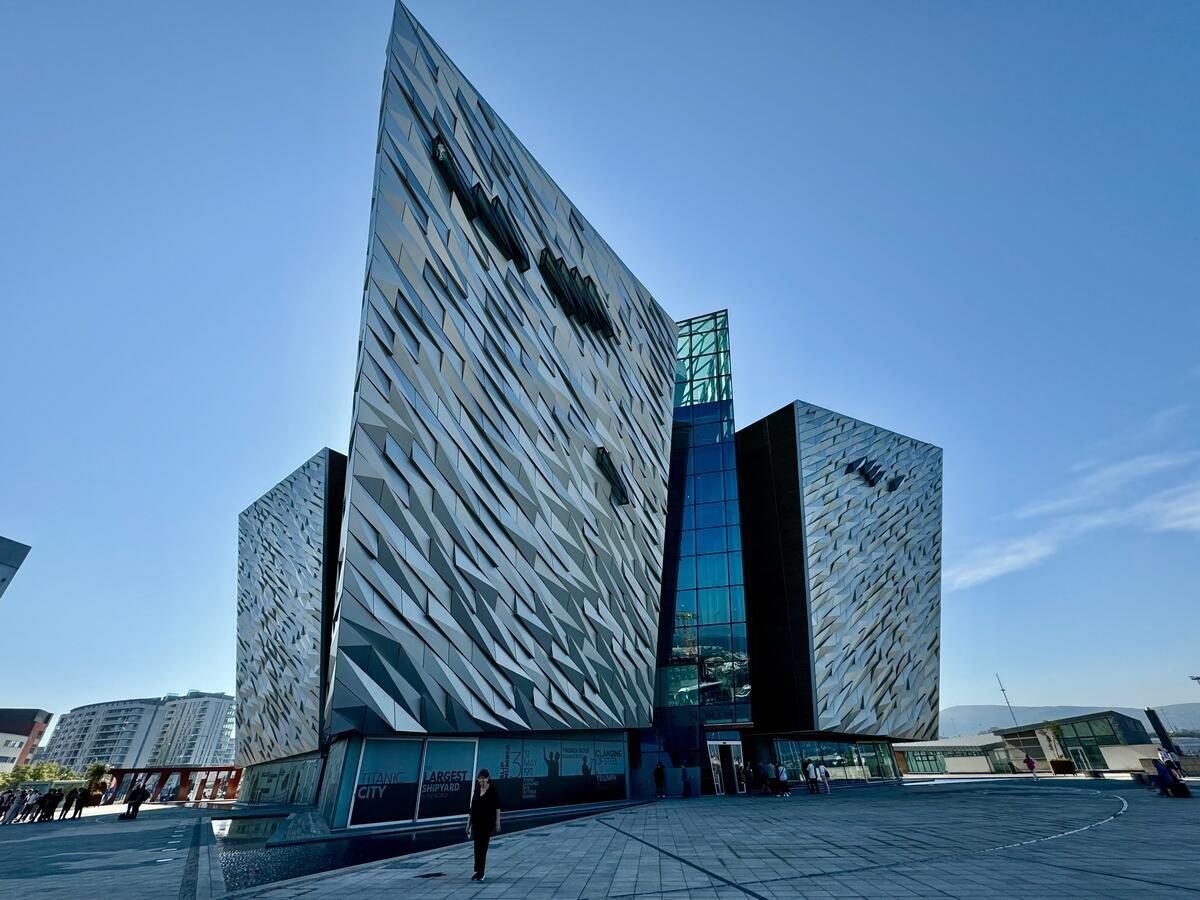
A genuinely world-class museum, built on the very slipways in the Titanic Quarter where the great ship was designed, built and launched. Across nine immersive galleries it walks you from the boomtown of Edwardian Belfast through the ship’s construction, its maiden voyage and its loss, ending at the slipway itself. The striking, angular building, its prows echoing ship hulls, has become a symbol of the city’s revival, and it’s consistently rated among Europe’s leading visitor attractions.
Check out the Titanic tour here.
Black taxi tours and the murals
For an honest, human introduction to Belfast’s recent past, take a black-cab tour through the Falls and Shankill roads. Your driver, very often someone who lived through the Troubles, will talk you through the famous political murals, the peace walls and the gates that still divide some communities, with a frankness and lack of bitterness that tends to stay with people. It’s the single best way to understand the city, and to grasp how far it has come.
For more information on the Black Taxi Tour click here.
Crumlin Road Gaol and the Cathedral Quarter
Tour the atmospheric Crumlin Road Gaol, a Victorian prison that held inmates from 1845 right up to 1996 and now runs guided tours through its wings, cells and the tunnel that once linked it to the courthouse opposite. Then spend an evening in the cobbled Cathedral Quarter, the beating heart of Belfast nightlife, where traditional pubs like the Duke of York spill out music and conversation onto narrow lantern-lit streets. It’s the perfect mix of heavy history by day and good craic by night.
Book a guided tour of Crumlin Road Gaol
County Down and the Mourne Mountains
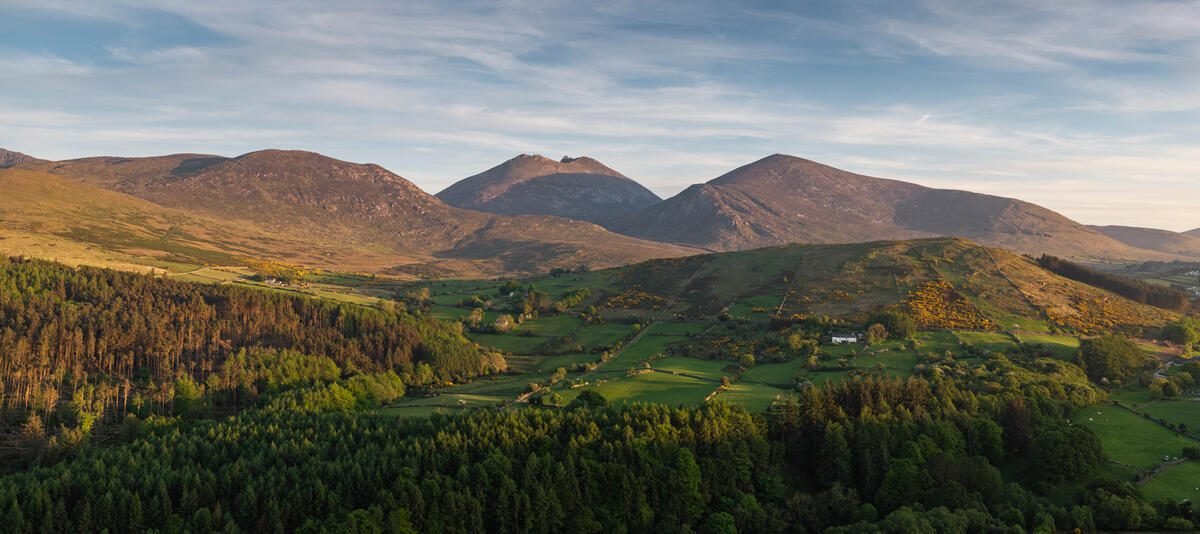
This is my home patch, and the part of Northern Ireland I’d most urge you not to skip. It’s quieter and wilder than the famous coast, yet it sits right on Belfast’s doorstep, a landscape of granite mountains, sea loughs and small harbour villages that most visitors drive straight past on their way north.
The Mourne Mountains
The highest mountains in Northern Ireland, sweeping down to the sea around the town of Newcastle, and the landscape that famously inspired C.S. Lewis’s Narnia. Their most striking feature is the Mourne Wall, a remarkable dry-stone wall built in the early 1900s that marches for over twenty miles across fifteen summits. Whether you tackle the climb up Slieve Donard, the highest peak, or just walk a gentle stretch of the wall, the views, out to the Isle of Man, Donegal and beyond on a clear day, are extraordinary.
See mountain biking, kayaking and paddleboarding at Castlewellan, at the foot of the Mournes
Tollymore Forest Park
A gorgeous forest park at the foot of the Mournes, laced with stone bridges, grottoes, follies and riverside paths along the tumbling Shimna. It was Northern Ireland’s very first state forest park, and film fans will recognise it as both the haunted forest beyond the Wall in Game of Thrones and a location in the Chronicles of Narnia. There is no entry fee for the forest, parking is £5 for the day, and it is brilliant for families, with trails to suit every pair of legs. It is my favourite place in Northern Ireland, and I have written a full guide to Tollymore Forest Park covering the parking, the trails, the Game of Thrones locations and what to do in Newcastle afterwards.
Strangford Lough and the Ards Peninsula
A vast, tranquil sea lough, the largest in these islands, ringed by pretty villages and richer in wildlife than almost anywhere else in the country, with seals, seabirds and thousands of overwintering brent geese. On its shores you’ll find the grand house and world-famous gardens of Mount Stewart, and Castle Ward, the 18th-century estate that doubled as Winterfell. The Ards Peninsula that shelters the lough is a lovely, low-key drive in its own right.
St Patrick’s County
Down is St Patrick’s county, and his story is woven all through it. Downpatrick is the reputed burial place of Ireland’s patron saint, marked by a simple granite slab beside Down Cathedral, and home to the St Patrick Centre, which tells his story in his own words. A few miles away, the quiet little church at Saul stands where he is said to have founded his first church and begun his Irish mission.
Derry–Londonderry
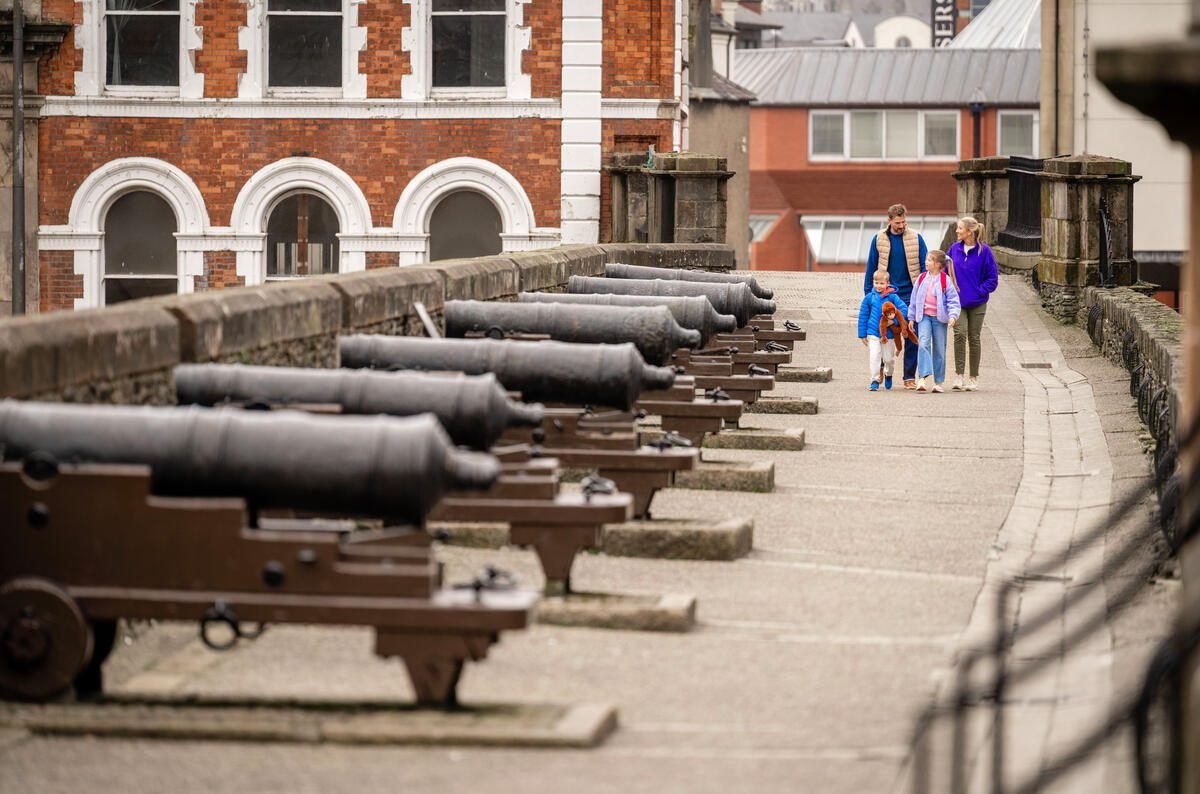
Ireland’s only completely walled city, and one of the most rewarding places in the country to simply walk and absorb. Compact, characterful and steeped in history both ancient and recent, Derry has emerged as a confident, creative city, and it makes a natural anchor for exploring the north-west.
Derry is also the best Halloween city in the world, and it turns forty in 2026. See the full Derry Halloween guide.
Derry is also the gateway to the Inishowen Peninsula, just across the border in Donegal. Grianán of Aileach is a twenty minute drive from the city walls, and the whole peninsula makes an easy day trip or overnight.
The City Walls
Built in the early 1600s and still entirely intact, Derry’s walls form a roughly one-mile circuit you can walk in under an hour, the best possible introduction to the city’s layout and its turbulent story. Never breached in any siege, they earned the city its nickname, the “Maiden City.” Along the way you’ll pass cannon, original gates and viewpoints looking down over the neighbourhoods below.
Book a guided walking tour of the walled city
The Bogside murals and the Peace Bridge
Just below the walls lies the Bogside, where the vast People’s Gallery murals and the famous “You Are Now Entering Free Derry” wall tell the story of the civil rights era and the Troubles with raw power. The nearby Museum of Free Derry deepens the picture. For a sense of the city’s future rather than its past, cross the elegant, curving Peace Bridge over the Foyle, opened in 2011 to symbolically connect the two sides of the city, to the regenerated Ebrington Square.
Learn more about a tour of the city here.
Fermanagh and the Lakelands
For a quieter, watery side of Northern Ireland, head south-west to the Fermanagh lakelands, where great stretches of Upper and Lower Lough Erne dominate the landscape and the pace of everything slows right down. It’s a region for boats, islands and underground wonders rather than queues and crowds.
Lough Erne and Devenish Island
A sprawling, island-studded lake system that’s perfect for cruising, kayaking or simply pottering about by boat. The jewel is Devenish Island, reachable by ferry, where an atmospheric early-Christian monastic settlement, complete with a perfectly preserved round tower you can climb, has stood since the 6th century. It’s the kind of peaceful, time-stopped spot that rewards going a little out of your way.
Marble Arch Caves
One of Northern Ireland’s most unusual days out: a UNESCO Global Geopark where guided tours take you deep underground, including a boat trip along a subterranean river through chambers of stalactites and shimmering pools. Above ground, the same geopark includes the celebrated Cuilcagh boardwalk, the “Stairway to Heaven”, a striking trail across the bog to a mountain viewpoint.
Browse tours and tickets across Northern Ireland
County Armagh
Armagh is the ecclesiastical capital of Ireland and the most overlooked county in the north. The city has two cathedrals, both called St Patrick’s, one Church of Ireland and one Roman Catholic, sitting on separate hills looking at each other across the town. It is a strange and rather Irish arrangement and worth the walk between them.
Two miles west of the city is Navan Fort, Emain Macha, the royal seat of the kings of Ulster in the Ulster Cycle and the setting for much of the Táin. What survives above ground is an earthwork on a hill, so go for what happened there rather than what is standing. The Navan Centre next door does the interpretation.
Armagh is also orchard country, and the Bramley apple has protected status here.
Armagh also runs a four-day Georgian festival every November, held in the actual Georgian buildings rather than a mock-up of them. In 2026 it runs from the 26th to the 29th, and I have written up the Armagh Georgian Festival in full, including the free events most people miss.
Book Navan Centre & Fort entry tickets
County Tyrone and the Ulster American Folk Park
If your family left Ulster for America, this is the most direct thing you can do about it. The Ulster American Folk Park sits outside Omagh and walks you through the whole journey: an Ulster village of thatched cottages, then onto a full-size emigrant sailing ship, and out the other side into an American frontier settlement. Costumed guides work the buildings and there are real fires in real hearths.
It is an outdoor museum, so pick your day, and allow three hours rather than one.
Game of Thrones filming locations in Northern Ireland
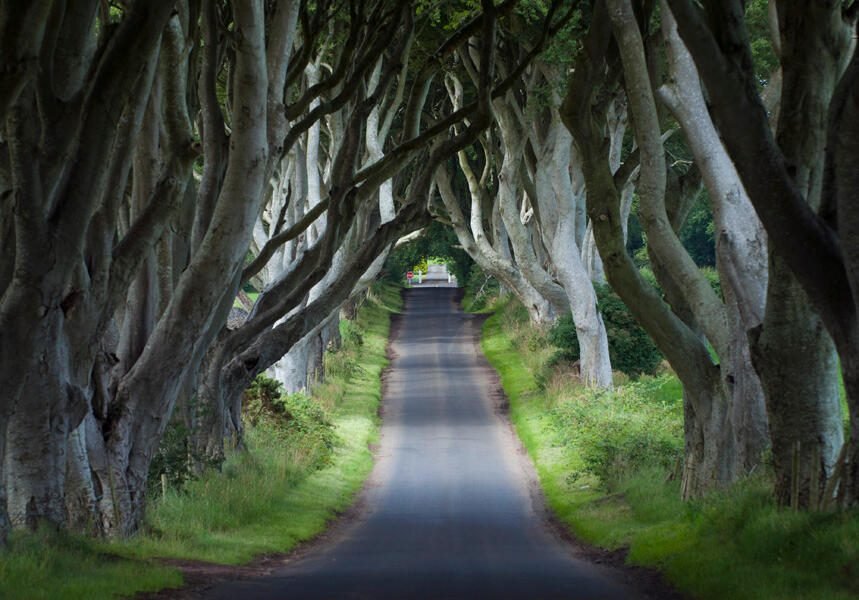
Northern Ireland was the primary filming home of Game of Thrones, and tracking down the locations turns the whole country into one giant set. Castle Ward on Strangford Lough was Winterfell itself; the Dark Hedges became the Kingsroad; Ballintoy Harbour stood in for the Iron Islands; the eerie Cushendun Caves hid one of the show’s darkest scenes; and Tollymore Forest was the haunted woods beyond the Wall. To go behind the scenes properly, the Game of Thrones Studio Tour at Banbridge houses original sets, costumes and props from the series, a must for any fan, and a surprisingly good day out even for those who never watched it.
Book admission to the Official Game of Thrones Studio Tour
Book the Studio Tour with coach transfer from Belfast, if you are not driving.
Book the Giant’s Causeway and Game of Thrones filming locations day tour, which is the efficient way to see the outdoor sites in one go.
Things to do in Northern Ireland with kids
Northern Ireland is a brilliant family destination, not least because so much of the fun is outdoors and free. W5 in Belfast is a superb interactive science and discovery centre that can happily swallow a rainy afternoon, while older kids will be gripped by Titanic Belfast. The forest parks, Tollymore and Castlewellan especially, are made for running wild, building dens and burning off energy, and the country’s long, safe beaches are perfect for younger ones. For a bit more adventure, the guided Gobbins cliff path thrills older children, and clambering over the Giant’s Causeway stones is a hit at any age.
Free things to do in Northern Ireland
You can fill days here without spending much at all, because so many of the best experiences are simply out in the open. Walking out to the Giant’s Causeway stones is free, as are the Dark Hedges, the coastal and mountain walks across the Mournes and Antrim, and Derry’s complete city walls. In Belfast, the grand City Hall and the bustling St George’s Market cost nothing, and the political murals are free to wander. Add in the beaches and forest parks, pack a flask of tea, and the scenery does all the heavy lifting.
Unusual things to do in Northern Ireland
Once you’ve ticked off the headline sights, Northern Ireland has a deep seam of quirkier experiences for the curious. Walk the Gobbins, a dramatic Edwardian cliff-path of bridges and tunnels bolted to the sheer Antrim coast, accessible only by guided tour. Drift by boat through the underground river of the Marble Arch Caves, or explore the Crom Estate’s ancient woodland and ruined castle by the shores of Lough Erne. Seek out tucked-away beaches, eccentric little museums and roadside curiosities the tour buses never reach, the kind of finds that make a trip feel like yours rather than everyone else’s.
Where to stay in Northern Ireland
Everything’s close, so you can base yourself in one or two spots and day-trip out. Here are trusted options by area, across budgets.
Belfast
- The Merchant Hotel, five-star opulence in a grand old bank building in the Cathedral Quarter.
- Culloden Estate & Spa, a country-house spa hotel overlooking Belfast Lough.
- Titanic Hotel Belfast, characterful, right by Titanic Belfast.
- Budget chains (Premier Inn, easyHotel, Maldron) cover the city centre well.
The Causeway Coast
- Bushmills Inn, a historic, cosy 4-star inn minutes from the Giant’s Causeway.
- Ballygally Castle Hotel, a 17th-century castle hotel on the coast road.
- The Salthouse, Ballycastle, a stylish eco hotel with sea views.
County Down and the Mournes
- Slieve Donard Resort & Spa , the grand landmark hotel in Newcastle, between the beach and the Mournes.
- Plus lovely guesthouses and self-catering cottages throughout the Mournes and Ards Peninsula.
Fermanagh
- Lough Erne Resort, a five-star lakeside golf and spa resort.
Is Northern Ireland safe to visit?
It’s a fair question, and the simple answer is yes, Northern Ireland is a safe, welcoming place to visit, and has been for a long time. The headlines that may linger in some people’s memories belong largely to a chapter that ended with the peace process of the late 1990s. Today, Belfast and Derry are vibrant, confident cities, and tourism is one of the great success stories of that transformation.
Rather than something to be nervous about, that history is part of what makes a visit here so meaningful. You can explore it openly and respectfully, on a black-cab tour through Belfast, along Derry’s walls and Bogside murals, usually guided by people who lived through it and are remarkably generous in sharing their stories. You’ll find ordinary, sensible travel precautions are all you need, exactly as you would in any city. What you’ll mostly come away with is how genuinely friendly the place is. Northern Ireland has been through more than most, and it has emerged warmer, prouder and more worth visiting for it.
How to get to and around Northern Ireland
Fly into Belfast International or Belfast City airport, or arrive by ferry into Belfast or Larne. From the Republic, it’s about two hours by car or bus from Dublin to Belfast. Once here, a car is the best way to explore the coast and the mountains, though Belfast and Derry are easy without one.
How many days do you need in Northern Ireland?
A long weekend covers Belfast plus a day on the Causeway Coast. Four to five days lets you add the Mournes and County Down, or Derry and the north-west. A week means you can take it slowly and fold in Fermanagh, or continue straight over the border into Donegal.
Suggested Northern Ireland itineraries
Three days. Belfast for a day and a half, taking in Titanic Belfast, a black taxi tour and Crumlin Road Gaol. Then the Causeway Coast: Dunluce, the Giant’s Causeway, Carrick-a-Rede and the Dark Hedges. This is the version most people do and it works.
Five days. The same, plus Derry for the walls and the Bogside, and a night in the city. Add the Sperrins or a run out to the Ulster American Folk Park on the way over.
Seven days. All of the above, plus the Mournes and County Down at one end and Fermanagh at the other, with a detour through Armagh. Seven days also lets you cross into Donegal for a day, which I would do, and I have written up things to do in Donegal separately.
Browse tours, tickets and day trips across Northern Ireland
Christmas in Belfast
The Belfast Christmas Market fills the City Hall grounds from mid-November, and it is free to walk into. Here is the honest guide to the Belfast Christmas Market, including the food worth queueing for and how to go without the crush.
Halloween in Northern Ireland
Northern Ireland has a better claim than anywhere else to being the home of Halloween. The festival grew out of Samhain, the Gaelic marking of the end of harvest and the start of winter, and it was kept across the north of Ireland for centuries before anyone in America carved a pumpkin. Turnips came first, and they are considerably more frightening.
Derry now runs what is routinely billed as the biggest Halloween festival in the world. It started as a fancy dress night in a city pub in the mid 1980s and has grown into a multi-day carnival with a parade, street theatre and fireworks over the Foyle, drawing crowds in the tens of thousands. If you want to be there, book accommodation months rather than weeks ahead.
I have written both of these up in full: Halloween events in Northern Ireland and how to actually do Derry Halloween.
Browse tours and experiences in Derry
Food and drink in Northern Ireland
Belfast has become a genuinely good food city over the last decade, particularly around the Cathedral Quarter and St George’s Market at the weekend. Beyond that it is seafood on the coast, Armagh apples, Comber potatoes, soda and potato bread, and the Ulster fry, which you should attempt once and then have a lie down.
On whiskey: the Old Bushmills Distillery in Antrim puts 1608 on the bottle. That date refers to a licence granted to Sir Thomas Phillips to distil in the wider region, not to the distillery, which was registered in 1784. It is still one of the oldest working distilleries anywhere, and the tour is good. It just is not quite what the label implies.
See Bushmills distillery tours and tastings
Book the McConnell’s distillery tour and tasting in Belfast
Money, costs and crossing the border
Northern Ireland is part of the United Kingdom and uses pound sterling. The Republic of Ireland uses the euro. If you are driving the Wild Atlantic Way and crossing into Donegal, or coming up from Dublin, you are changing currency, and plenty of places near the border will take both but give you change in one.
There is no border checkpoint and no passport control between north and south. You will usually only notice because the road signs change from kilometres to miles.
One quirk worth knowing: banks in Northern Ireland issue their own sterling banknotes. They are legal and worth exactly the same, but shops in Great Britain sometimes question them and a few will refuse them outright. If you are flying on to Britain with cash, change it before you go. Banks will swap it, plenty of shops here will do it if you ask, and so will the exchange desks.
There is a good deal more to it than the money. The full guide to crossing between Ireland and Northern Ireland covers the speed limits, the roaming charges that trigger before you cross, and the hire car insurance trap that can leave you uninsured the second you drive south.
One more local quirk: Sundays. Big shops in Northern Ireland can only open between 1pm and 6pm on a Sunday. It applies to anything over 280 square metres, so supermarkets, shopping centres and retail parks. Small shops, off licences, petrol stations and pharmacies open as normal. Do not build a Sunday morning around shopping.
Frequently asked questions
How many days do you need in Northern Ireland?
A long weekend covers Belfast plus a day on the Causeway Coast. Four to five days lets you add the Mournes and County Down, or Derry and the north-west. A week means you can take it slowly and fold in Fermanagh, or continue straight over the border into Donegal.
Is Northern Ireland safe to visit?
Yes, and it has been for a long time. The headlines some people remember belong largely to a chapter that ended with the peace process of the late 1990s. Belfast and Derry are confident, welcoming cities and ordinary sensible travel precautions are all you need, exactly as in any city.
Do you need a passport to travel between Northern Ireland and the Republic?
There is no border checkpoint and no passport control between north and south. You usually only notice the crossing because the road signs change from kilometres to miles.
What currency is used in Northern Ireland?
Pound sterling, because Northern Ireland is part of the United Kingdom. The Republic of Ireland uses the euro. Banks in Northern Ireland also issue their own sterling notes. They are legal and worth the same, but shops in Great Britain sometimes question them and a few refuse them outright, so change your cash before flying on.
What can you do in Northern Ireland for free?
A great deal. Walking out to the Giant’s Causeway stones is free, as are the Dark Hedges, the coastal and mountain walks across the Mournes and Antrim, and Derry’s complete city walls. In Belfast, City Hall, St George’s Market and the political murals all cost nothing.
When is the best time to visit Northern Ireland?
Generally late spring to early autumn. It rains, and it can do all four seasons before lunch, so the trick is not waiting for perfect weather but coming prepared. Layers, a properly waterproof jacket and decent footwear.
Plan your Northern Ireland trip
Northern Ireland pairs perfectly with neighbouring County Donegal, together they make up the whole north of Ireland, and you can cross seamlessly between them.
See our full guide to things to do in Donegal
I share the stories behind these places on TikTok, then write up how to visit them here.
What’s your favourite spot in Northern Ireland? Tell me in the comments, and let me know what I should write up next.
Coming from the other side of the border? There is no checkpoint, but the money, your phone and the speed limits all change. Read the guide to crossing between Ireland and Northern Ireland.
Pin this for later
Planning a trip? Save this to Pinterest so you can find it again.

Written by
Diana Greenlee
I live in County Down and write Tales of Irish Travel. After years living abroad I came home during Covid and started properly exploring the island. I write about the history and the story behind a place, not just the place. More about me.