
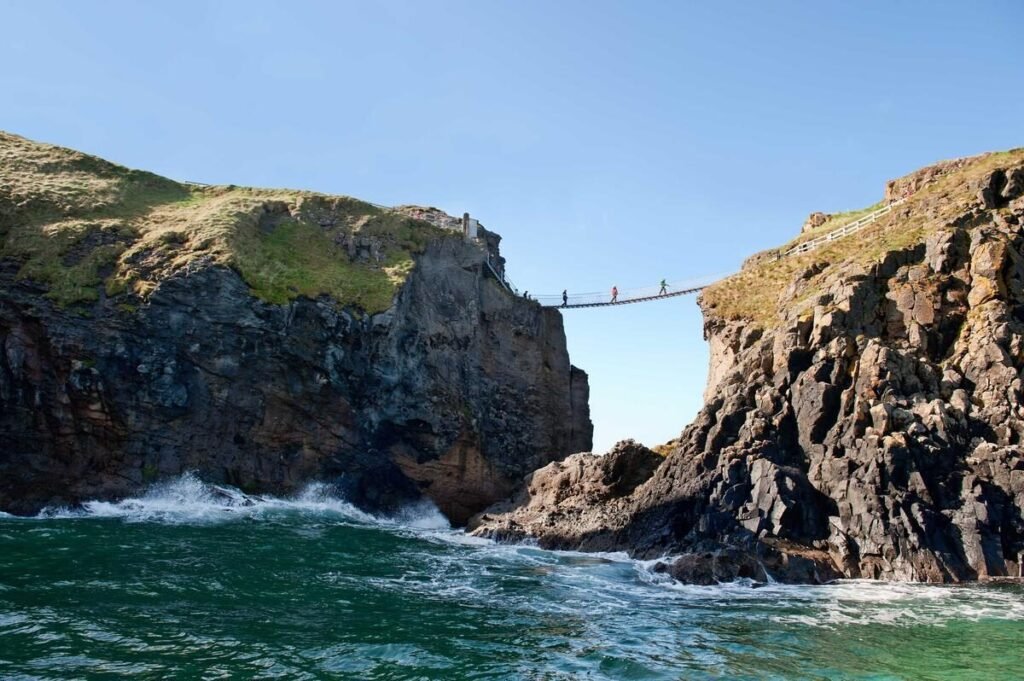
The Causeway Coastal Route is the road that made me want to write about home in the first place. It runs from Belfast up the Antrim coast and along to Derry, and for long stretches the sea is right there at the edge of the tarmac.
Here is the honest part before the pretty part. Most people try to do it in one day, usually from Dublin, and one day is not enough. You end up looking at the clock instead of the water. If you are weighing this against everything else you could do with the day, I have gone through the real timings for every day trip from Dublin.
Some links in this guide are affiliate links. If you book through one I may earn a small commission, at no extra cost to you. As an Amazon Associate I earn from qualifying purchases. I only link to things I would use myself.
If you are fitting this into a longer trip, the coast road is the last day of my five day Northern Ireland road trip, which goes over into Donegal and comes back on the ferry.
What the Causeway Coastal Route actually is
It is a signed tourist drive between Belfast and Derry, promoted by Tourism Northern Ireland, and its spine is the A2 coast road.
You will see the length given as roughly 120 miles, or 190km. Worth knowing that Tourism NI does not actually publish a distance on its own route page, and the 120 mile figure comes from a long running volunteer site rather than an official one. Treat it as a good ballpark rather than gospel.
The driving time is the same story. Nobody official publishes one, because the answer depends entirely on how often you stop, and on this road you will stop.
Flying from the US?
Most Americans pay too much to get to Ireland.
I send one email a week with the best fares from US airports into Dublin, Shannon and Belfast, plus what to actually do when you land. $14.99 for the year, refunded if it does not pay for itself.
The Causeway Coastal Route map
Every stop below is on the map. Click a pin to see what it is, or use the list underneath. The ones I have written full guides for are linked.
Map tiles by OpenStreetMap contributors. If the map does not load, the full list is below.
How long you actually need
One day. Doable, and it is what most day tours from Belfast sell. You will get the Causeway, a rope bridge stop and a few photographs of the coast. You will not get the glens.
Two days. This is the one I would book. Belfast to Ballycastle on day one with the glens in the middle, then Ballycastle to Derry on day two with the Causeway and Dunluce. A night on the coast changes the whole trip.
Three days. Now you can add the Gobbins or a walk at Glenariff without rushing, and still have an evening in Derry at the end.
Whatever you choose, build in slack. The weather here turns in minutes, the rope bridge closes whenever it is too windy, and a fixed schedule on this coast is a schedule you will break.
The stops, in order from Belfast
Carrickfergus Castle
The first proper stop out of Belfast, and an Anglo-Norman castle sitting right on the lough. It is a state care site, so National Trust membership does not cover it. Adult £6, child £4, family £18, under fives free, and there is a cheaper summer saver rate from late June to early September. Guided tours are included in the ticket.
The Gobbins
A guided cliff path on Islandmagee with bridges bolted into the rock face. It is the most expensive stop on this whole route at £23.50 an adult and £17.50 a child, it takes about three hours, and you must book. Children need to be over 1.2m and cannot be carried, so it rules out little ones. If you have the time and the legs, people rave about it.
Glenarm and Carnlough
Two harbour villages a few minutes apart, and the point where the road really starts to earn its reputation. Free to walk about. Glenarm Castle and its walled garden is a separate paid attraction if you want it.
Glenariff Forest Park
The waterfall walk, and the one people mean when they say the Glens of Antrim. It is £5 for a car, payable on arrival, and the forest itself is open to walkers around the clock while the car park gates are locked at dusk. Bring proper shoes. It is a waterfall walk in Ireland, so it is wet underfoot more often than not.
Cushendun caves
Free, and a National Trust village, with two free car parks. The caves are a Game of Thrones location and they take ten minutes, which makes them one of the better value stops on the coast.
The Torr Head road
A 14 mile detour with the best views on the route and the worst road surface. It is narrow, unlined in places, with steep climbs and a single lane drop to the car park at the end. It is not for coaches, campervans or anything wide. If you are in a hire car and confident, take it. If you are not, stay on the A2 and you will not have missed the day.
Ballycastle
A proper town rather than a viewpoint, which is exactly why it is the right place to stop for the night. Ferries to Rathlin go from here.
Carrick-a-Rede
The rope bridge. Adult £16, child £8, family £40, and you have to book ahead even if you are a National Trust member. It closes in high winds and there is nothing anybody can do about that, so do not build your day around it. The full story of what crossing it is like, the steps down and the dog rule, is in my guide to Carrick-a-Rede.
Ballintoy Harbour
A wee pier down a very steep narrow road, and worth the five minutes it takes to drop down to it. Free. It is the kind of stop you would drive past without knowing it was there.
The Dark Hedges
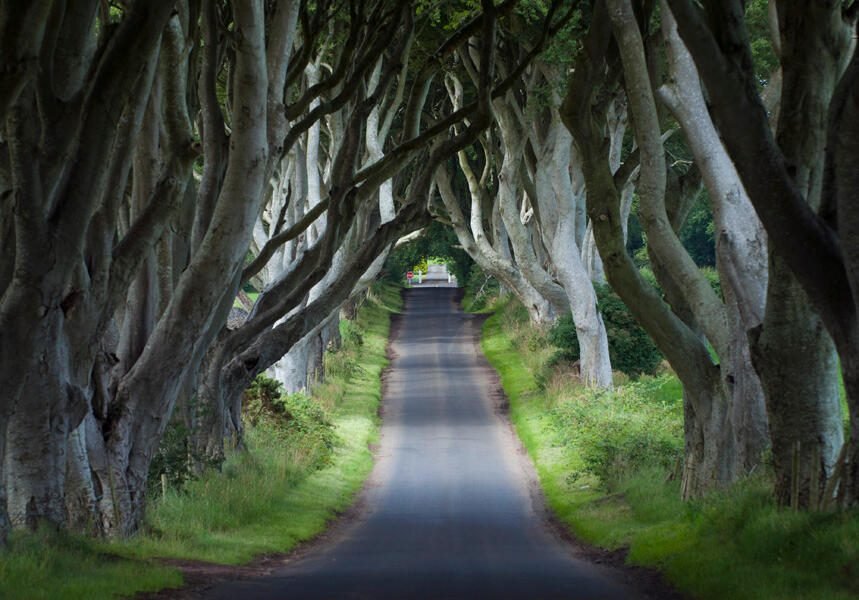
The beech avenue, and the one stop on this route I would tell you to think twice about. The trees are free to look at but you cannot park anywhere near them, the Bregagh Road has been closed to cars since 2017, and the nearby car parks charge. I paid somewhere around a fiver. Here is the honest guide to the Dark Hedges, including whether it is worth that charge.
The Giant’s Causeway
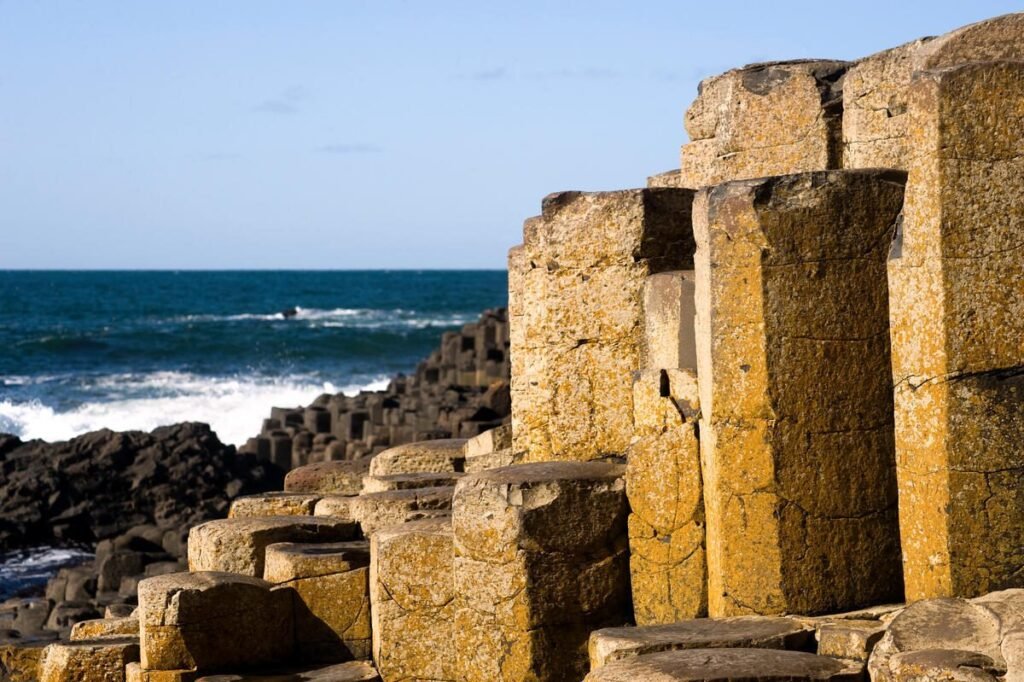
The reason most people come. The stones themselves sit at the end of a public right of way and cost nothing to walk to, which surprises people. The Visitor Experience is £16 an adult, £8 a child, £40 a family, and that ticket includes the reserved car park, the audio guide and the exhibition. I would pay for it. The full Giant’s Causeway guide covers the free route, the clifftop walk most people miss, and where to park if you are not buying a ticket.
Old Bushmills Distillery
Licensed in 1608 and still working. Tours run and you book online. Bushmills does not publish a gate price on its own site, so check before you build it into the day, and note that under eights cannot join a guided tour. The kitchen is no longer running, so do not plan lunch here.
Dunluce Castle
If you are driving this route, stop at Dunluce. A ruin on a sea stack with a bridge across to it, and it photographs better than almost anything else on the coast. It is a state care site, so National Trust membership does not help. Charges apply and the published figures vary between sources, and so do the opening hours, so ring ahead on 028 2073 1938 if it matters to your day.
Portrush and Whiterocks
A seaside town with a proper beach, and the limestone cliffs at Whiterocks just east of it. This is where you stop if you have children who have been in the back of a car all morning.
Downhill Demesne and Mussenden Temple
The clifftop rotunda you have seen on every Northern Ireland poster. National Trust, so members get in and park free, but everybody else pays £10 a vehicle for the day and the machine takes card only. Worth checking the National Trust page before you go, because the temple itself was showing as closed in September 2026 while the grounds stayed open.
Binevenagh
The escarpment above Limavady, and the last big view before the road drops towards Derry.
Derry
The end of the route, and a city worth more than the couple of hours most itineraries give it. The walls are state care and free to walk. If you are here at the end of October, Derry Halloween is the biggest thing that happens in this city all year.
Where National Trust membership pays for itself
This catches people out, because two different organisations look after the big sites on this road and one membership only covers one of them.
National Trust, so membership covers you: the Giant’s Causeway, Carrick-a-Rede, Downhill Demesne and Mussenden Temple, and Cushendun village.
State care sites, so membership does not: Carrickfergus Castle, Dunluce Castle and the Derry walls.
Do the sums before you travel. Two adults doing the Causeway and Carrick-a-Rede is £64 in tickets, and that is before the £10 to park at Downhill. If you are doing this route properly, a membership can pay for itself inside two days. Members still have to book both National Trust sites in advance, so the card does not let you turn up on spec.
Driving it: the bits nobody warns you about
You will see less than your passengers. This is my honest complaint about driving this coast. The road is narrow, the turns come quickly and you are watching for the next car park rather than the sea. If somebody else in your party wants to drive, let them.
The Torr Head road is not for every vehicle. No coaches, no campervans, nothing wide.
You cannot drive the Dark Hedges. The Bregagh Road has been closed to traffic since 2017 to protect the roots. Your sat nav may not know that.
Parking is the real cost. Almost nothing on this route charges you to look at it. Nearly everything charges you to leave the car.
Check the roadworks. The A2 gets patched, netted and resurfaced constantly, and schemes change weekly. Trafficwatch NI is the place to look the night before you travel.
Hiring a car for this is the sensible move if you are coming into Belfast or Dublin by air. Compare hire cars for Northern Ireland here. If you are picking the car up in the Republic and driving north, read what actually changes when you cross the Irish border first, because the insurance trap catches people every year.
Doing the Causeway Coastal Route without a car
It is more possible than people think, and Translink runs all of it.
The Causeway Rambler, service 402, runs between Coleraine and Ballycastle and stops at Dunluce Castle, Bushmills and Carrick-a-Rede, which is most of the north coast in one ticket. The Antrim Coaster, service 252, runs the Antrim coast itself. Both are described as seasonal by the regional tourism body, although Discover Northern Ireland lists them without that caveat, so check the current timetable rather than trusting either page.
By rail, Belfast Grand Central runs to Coleraine and on to Derry, and the Derry stretch is one of the great train journeys anywhere. For Portrush you change at Coleraine.
Or let somebody else drive
I live here, and I have done this coast both ways. If you asked me which I would do again, I would take the coach tour, and I say that as somebody who can drive it any weekend.
You see more, you learn more, and you are not the one reversing into a passing place. My honest guide to Giant’s Causeway tours goes through what a day actually covers and what is often not included, or you can compare tours from Belfast here.
Where to stay along the route
Two nights is the version that works: one on the coast, one at either end.
Belfast, at the start. We stayed in the Titanic Hotel Belfast and liked it a lot. It is the old Harland and Wolff drawing offices, so the building is the attraction as much as the room, and you are a short walk from the Titanic museum. See the full list of Belfast hotels here.
Ballycastle or Bushmills, in the middle. Staying up here is what buys you an early morning at the Causeway or the Dark Hedges before the coaches arrive, which is the single best trick on this route.
Derry, at the end. See the full list of Derry hotels here.
When to go
May and September are the sweet spot. Long enough days, fewer coaches, and the light on this coast in September is the best of the year.
Summer is busy and the Causeway car park fills early. Winter is empty and beautiful and the daylight is short, so plan around three or four hours of usable light rather than a full day. More on that in October, November and December.
And look, let us be honest with each other. You are coming to the island of Ireland. Bring a rain jacket and expect rain, whatever month is on the ticket.
Carrying on into Donegal
Derry is not the end of the road, it is a junction. Inishowen starts about twenty minutes away, and it is wilder and emptier than anything on the Antrim side. Here is every stop on the Inishowen 100, on one map, and this is what changes when you cross the border: the money, your phone, the speed limits and your hire car insurance.
If your phone plan does not cover both sides, an eSIM with a Europe plan covers the UK and Ireland and saves the roaming ping-pong along the border.
Frequently asked questions
How long is the Causeway Coastal Route?
It is usually given as about 120 miles, or 190km, between Belfast and Derry. Tourism Northern Ireland does not publish a distance itself, so treat that as a ballpark.
How many days do you need for the Causeway Coastal Route?
Two. One day covers the Causeway and a couple of photo stops. Two days lets you add the glens and stay a night on the coast, which is where the trip stops feeling like a transfer.
Can you drive the Causeway Coastal Route in a day?
Yes, and plenty of tours do exactly that. You will see the headline stops and very little else, and you will be in the car for most of it.
Is the Causeway Coastal Route free?
The road is, and so are most of the views, the villages, Ballintoy Harbour, Cushendun caves and the walk down to the Giant’s Causeway itself. What costs money is parking, and the ticketed attractions like Carrick-a-Rede, the Gobbins and the Causeway Visitor Experience.
Which direction should you drive it?
Belfast to Derry. The sea is on your right the whole way, which means the good pull-ins are on your side of the road and you are not crossing traffic to use them.
Can you do the Causeway Coastal Route without a car?
Yes. Translink’s Causeway Rambler 402 covers Dunluce, Bushmills and Carrick-a-Rede between Coleraine and Ballycastle, the Antrim Coaster 252 runs the coast, and the train gets you from Belfast to Coleraine and on to Derry. Check current timetables, because some of these services run seasonally.
Every stop on the map
- Carrickfergus CastleAnglo-Norman castle on the lough. Adult £6, and a state care site, so National Trust membership does not cover it.
- The GobbinsGuided cliff path with bridges bolted to the rock. Three hours, £23.50, booking essential, not for small children.
- GlenarmHarbour village where the coast road starts to earn its reputation. Free.
- CarnloughSmall harbour and a good coffee stop. Free.
- Glenariff Forest ParkThe waterfall walk and the Queen of the Glens. £5 a car, wet underfoot.
- Cushendun cavesFree, ten minutes, two free car parks, and a Game of Thrones location.
- Torr HeadBest views on the route, worst road. Not for coaches or campervans.
- BallycastleA real town rather than a viewpoint, and the right place to stay the night.
- Carrick-a-RedeThe rope bridge. Adult £16, book ahead, and it closes in high winds.
- Ballintoy HarbourA wee pier down a steep narrow road. Free, and worth the five minutes.
- The Dark HedgesFree to look at, not free to park, and you cannot drive down it.
- The Giant’s CausewayFree to walk to. The Visitor Experience is £16 an adult and includes the car park.
- Old Bushmills DistilleryLicensed 1608. Tours book online and no gate price is published, so check first.
- Dunluce CastleRuin on a sea stack. Charges apply, hours vary by source, ring ahead.
- Whiterocks and PortrushLimestone cliffs and a proper beach. The stop for children who have had enough of the car.
- Downhill Demesne and Mussenden TempleNational Trust. Parking £10 a vehicle, card only, free for members.
- BinevenaghThe escarpment above Limavady, and the last big view before Derry.
- DerryThe end of the route. Walk the walls, and come at Halloween if you can.
Pin this for later
Planning a trip? Save this to Pinterest so you can find it again.

Written by
Diana Greenlee
I live in County Down and write Tales of Irish Travel. After years living abroad I came home during Covid and started properly exploring the island. I write about the history and the story behind a place, not just the place. More about me.